Thursday, January 4, 2024
The need arose, propelled by the Indian Emergence, to start a new blog
https://www.eastrovedica.com/wordpress/
OF WORLD PEACE
It is heartening to note,
That the Indian PM's name,
Hath been recommended,
For establishing World Peace !
"My chariots shall not be bloody,
Till the earth records my name",
Said the conscientious Buddha,
As he renounced War.
Milton averred " Peace hath her victories,
No less renouned than War " !
Man's essential nature is Peace,
War is only an abnormality !
How can a Nation which declares Peace,
Aum Shanti, Shanti, advocate War ?
From the ethical, moral angle,
Peace gets Fame, and War notoriety !
Love cognised is Truth
Love in action is Non VIolence
Love as pure Being is Wisdom
Love as Feeling is Peace.
Yet, many believe that war is a necessity biologic,
An outlet for the human desire to compete and excel !
Conquest by force is only half victory,
True victory is conquest by Love !
Harmony has to be established,
And perfection worked out.
We have to effectuate the Divine,
In a conflicting and contradicting world !
We have been instructed,
To rise from Non Being to Being,
Asado Ma Sad Gamaya,
And to rise from Darkness to Light.
In other words,
From the Negative to the Positive.
But we have a big problem here,
As we are confronted by qualities negative !
We have seen Death,
But not Immortality !
Mrutyor Ma Amritam Gamaya,
Appears to be difficult !
Death, Non Being, Ignorance,
Darkness, adversity, disease,
All these we have seen,
But never experienced the Positive !
Qualties Negative,
Are merely the first terms of the Formula,
Unintellible to us,
Till we work out its esoteric terms !
These qualities negative,
Are merely initial discords
Of the Musician's symphony,
Didnt He create a world miserable ?
That too deliberately flawing perfection,
Of His Own Creation ?
The discords of the world are Lord's discords,
To unfold the Godhead within us?
The tormenting Evil is He,
As well as the Redeeming Grace !
Oru Kai Praharikkave
Maru Kai kondu thalodum Easwaran !
Only when we have an integral vision,
Can we see beyond all masks,
The serene and lovely face,
Of the All Blissful Godhead !
His tests test our imperfection,
True friemd is He and Heart, the Teacher !
Mind is the greatest Guru,
And world, the true Book !
Let us be what the Seer Poets recommended,
What Lord Krishna recommended to Arjuna,
Realised souls viewing Becoming,
Under the metaphor of Being !
Let us rise from Death to Self Realisation,
From the Darkness of Nescience to Light Supernal,
From the mirage of Non Being to True Being,
Thus fulfilling that eternal Prayer Asato Ma Sadgamaya !
Did not Bhagavan Aurobindo,
Say that Strive and thou shalt have ?
Trust and thy trust shall be justified ?
That the Divine Crown is within our reach ?
That we have to overcome the Negative,
And reach the Positive !
And Implement Positivity,
Then only shall the world be redeemed !
The Kingdom of Heaven,
Is both worldly and transworldly
To implement this Rama Rajya,
India, US and Russia exist !


Tuesday, February 25, 2014
Meissa or Mrigasira, the Head of Orion !
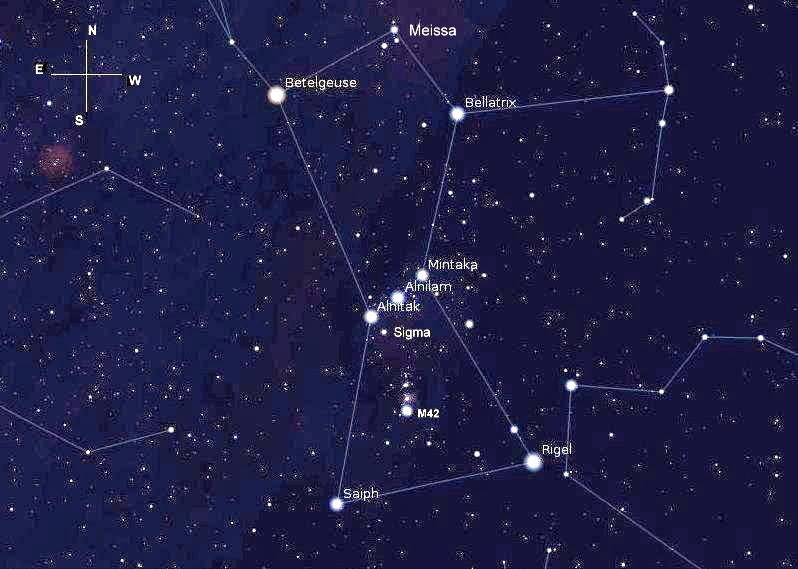
The Head of Orion was called by the Rishies as Mriga Sira. Mriga means the beast and Sira means head. Mrigasira is known in Malayalam as Makiryam !
Those born under Mriga Sira ( when the Moon tenants the constellation of Mriga Sira ) were found to be egotists and calumniers ! Ahamkaree paradweshee mrige bhavathi manava.
Makiryam is Meissa !
Monday, March 5, 2012
Indian Astrology sidereal

The sidereal basis of the Hindu Zodiac brings to relative significance, the importance the great Rishies have assigned to Suns, apart from ours, while being aware that our immediateoverlord is our own magnificent Sun. They were far more aware than the modern astronomers about the shifting character of the Vernal Equinoctial Point and furthur calculations that were deducible therefrom.
While Western Astrology is solar and tropical, based on the Tropical Zodiac, the Indian is sidereal. The word sidereal derives from the Latin sidereus, meaning the constellation of fixed stars, from 0 degree Aswini to the 360th degree of Revathi
The story of Trisanku, Alpha Centaurus

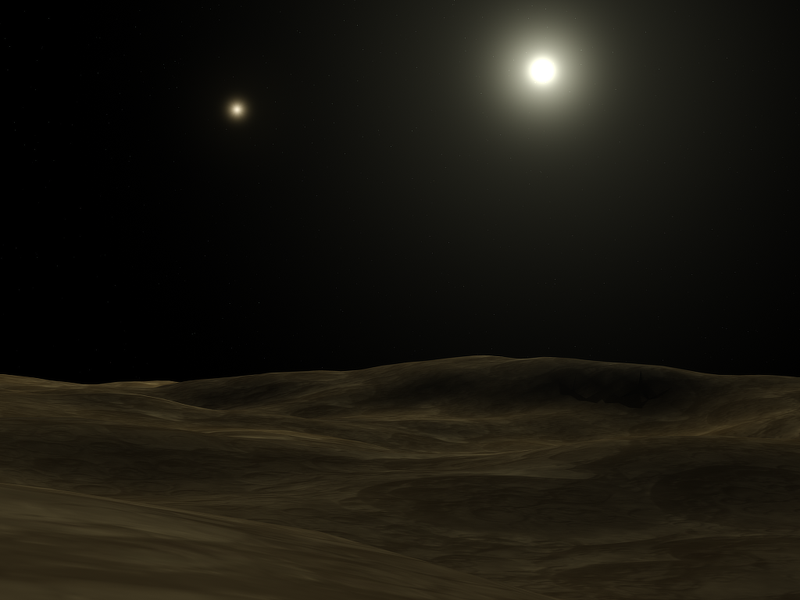
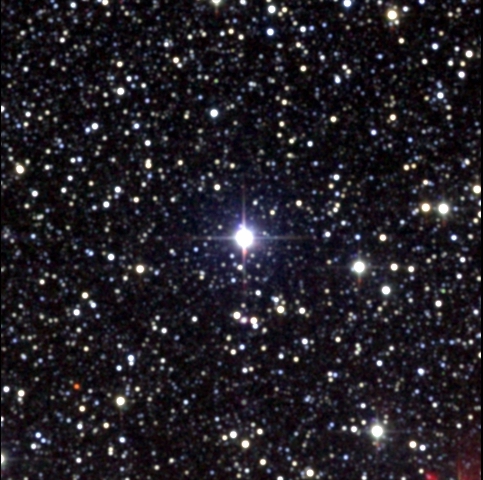
We will explain the mythological allegory of Trisanku. Trisanku wanted to reach Heaven with his body, much against the wishes of his Guru Vasishta and family. He was hurled back in space and he appealed to Vishwamitra for help. Vishwamitra with his yogic power created a Trisanku Swarga for him.
Although this is a mythological allegory, astro information is contained in this story. The nearest star to our Solar System is Proxima Centuari, a member of the Alpha Centauri system. The two bright components of Alpha Centauri are only slightly farther away, some 4.3 light years away from us. It is logical that Trisanku or Alpha Centaurus is just half way to the nearest bright star Sirius, which is 8.7 light years away. In between, in space, we do not have any other star, save Barnard's star, Wolf 359 and Lalande' s star, which are closer to Sirius, from where the real Heavens can be deemed to commence. Doesnt this story explain what Trisanku or Alpha Centaurus is ?
Bacon, in his De Sapientia Vaterum ( Of the Wisdom of the Ancients ) opined that scientific truths are contained in Greek and Indian Myths !
Although this is a mythological allegory, astro information is contained in this story. The nearest star to our Solar System is Proxima Centuari, a member of the Alpha Centauri system. The two bright components of Alpha Centauri are only slightly farther away, some 4.3 light years away from us. It is logical that Trisanku or Alpha Centaurus is just half way to the nearest bright star Sirius, which is 8.7 light years away. In between, in space, we do not have any other star, save Barnard's star, Wolf 359 and Lalande' s star, which are closer to Sirius, from where the real Heavens can be deemed to commence. Doesnt this story explain what Trisanku or Alpha Centaurus is ?
Bacon, in his De Sapientia Vaterum ( Of the Wisdom of the Ancients ) opined that scientific truths are contained in Greek and Indian Myths !
Saturday, March 3, 2012
The Ursa Major Cycle, Sapta Rishie Yuga
The constellation of Ursa Major, known as the Big Dipper, or the Big Bear and known as the Seven Rishies in Indian Astronomy. Atri, Angiras, Mareechi, Pulastya, Pulaha, Kritu, Vasishta.
In his ' Asiatic Researches", Prof Drayson says that ' the Hindus thought proper to connect their Mythology with an astronomical period of a strange nature. It is that of the Seven Rishies, moving along the Zodiac in a retrograde motion of 100 years in a constellation. As the Ecliptic is tenanted by 27 constellations, they take 2700 years to make a circuit of the Zodiac. This 2700 years is known as an Ursa Major Cycle or Sapta Rishi Yuga.
The first astronomical calender was erected by the Hindu Emperor, Vaivaswata Manu ( circa 8736 BCE ). It was based on the Ursa Major Cycle or Sapta Rishi Yuga.
TicketAmerica.com
TicketAmerica is a licenced ticket broker that provides
convenience from the largest quality of ticket events. Ticketamerica.com has
ledyard sports tickets for the new haven theatre tickets and oklahoma state
oregon state beavers football ticketsand then uncasville event tickets and seating
charts. . Ticketamerica.com has access to the washington huskies football tickets
and ucla bruins football tickets and Seattle Mariners schedule of
games.We specialize in otaining desirable tickets for high demand and sold
out events. Our noble aim is to provide our clients with the largest
selection of tickets at the lowest possible prices
In his ' Asiatic Researches", Prof Drayson says that ' the Hindus thought proper to connect their Mythology with an astronomical period of a strange nature. It is that of the Seven Rishies, moving along the Zodiac in a retrograde motion of 100 years in a constellation. As the Ecliptic is tenanted by 27 constellations, they take 2700 years to make a circuit of the Zodiac. This 2700 years is known as an Ursa Major Cycle or Sapta Rishi Yuga.
The first astronomical calender was erected by the Hindu Emperor, Vaivaswata Manu ( circa 8736 BCE ). It was based on the Ursa Major Cycle or Sapta Rishi Yuga.
TicketAmerica.com
TicketAmerica is a licenced ticket broker that provides
convenience from the largest quality of ticket events. Ticketamerica.com has
ledyard sports tickets for the new haven theatre tickets and oklahoma state
oregon state beavers football ticketsand then uncasville event tickets and seating
charts. . Ticketamerica.com has access to the washington huskies football tickets
and ucla bruins football tickets and Seattle Mariners schedule of
games.We specialize in otaining desirable tickets for high demand and sold
out events. Our noble aim is to provide our clients with the largest
selection of tickets at the lowest possible prices
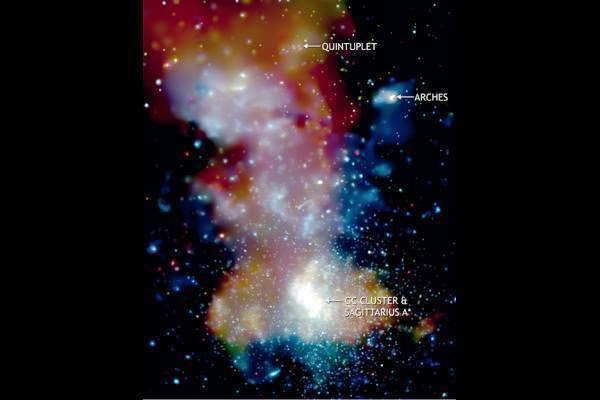
The Galactic Center, the Vishnu Nabhi
The Center of our Galaxy, the Milky Way, which lies in Sagittarius. Is it by chance that the Rishies called her the Navel of the Preserver, Vishnu Nabhi ?
The Pleiades, a fiery constellation ?

Subscribe to:
Posts (Atom)